
What we recommend: spring Flowering Trees

final spring flowering trees.png

Redbuds, Crabs, and Other Flowering Trees:

Spring blooming trees can add beauty and fragrant smells to your yard. There are many options for spring bloomers.

REDBUDS

Redbuds were previously not hardy in North Iowa.  That is no longer the case. The University of Minnesota developed a “Minnesota Strain” of Redbud that now does very well in this area. This small gracefully branched tree has beautiful lavender blooms that appear in early spring before the leaves.

FLOWERING CRABS

Flowering crabs are always a good choice for spring blooms and are very hardy.

Spring Snow Crabs have white blooms that do not produce any fruit.

There are many other varieties of crabs that grow anywhere from 8’ to 30’ and have blooms in various shades of white, pink, and reds. Most of these varieties produce only very small apples that birds usually clean off the tree.  We do not carry the older variety of crabs that produce very large apples.

OTHER SPRING BLOOMING TREES

Other spring blooming trees that can add interest to your yard include tree lilacs, serviceberries, hawthorns, fringetree, and fruit bearing trees.

CLICK BELOW with any questions about adding any of these beauties to your landscape!
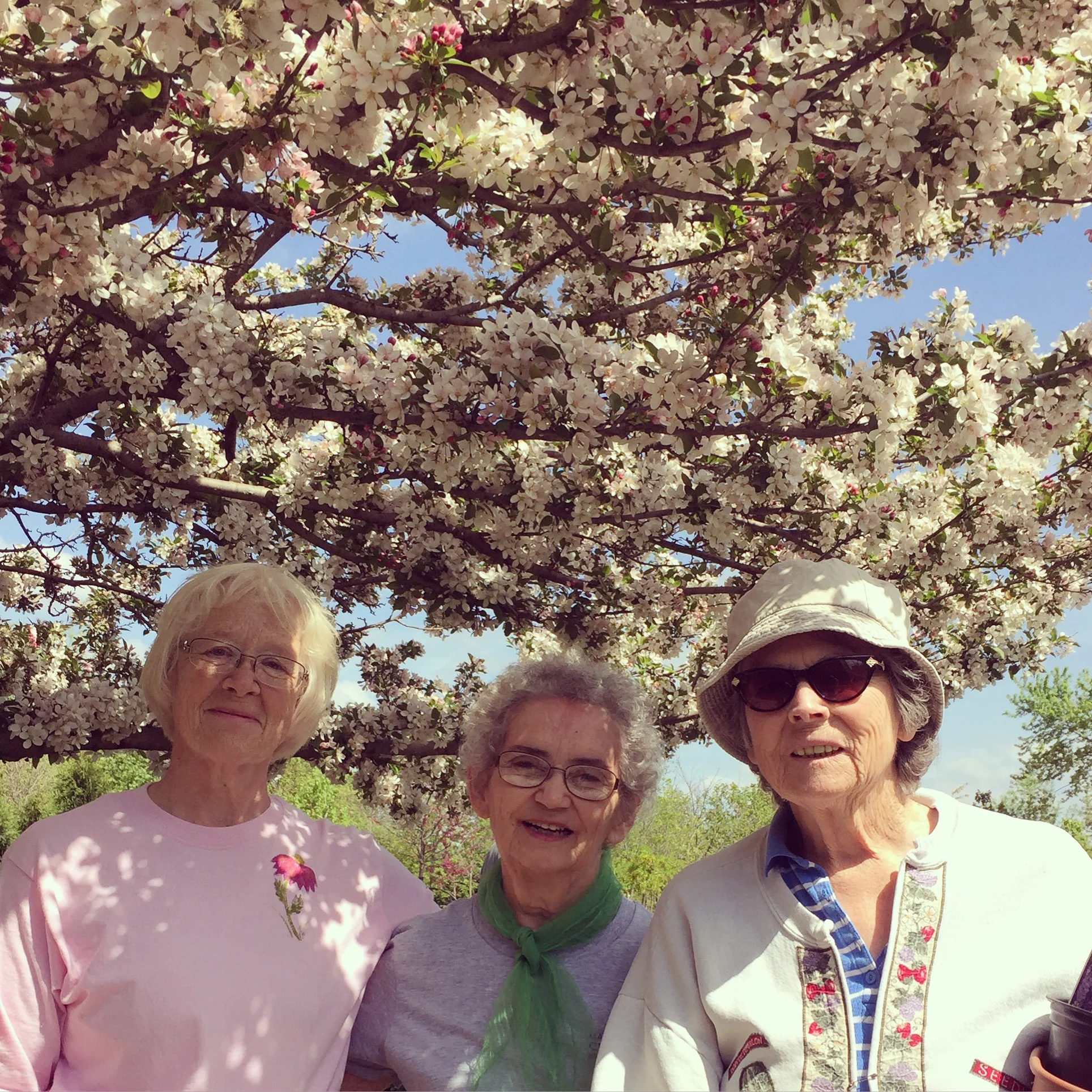
A tina crab in full bloom behind LINDA and neighbors MARY WOERNER and DONNA FURLEIGH

A tina crab in full bloom behind LINDA and neighbors MARY WOERNER and DONNA FURLEIGH

HOW TO PROTECT PLANTS FROM DEER OR RABBIT DAMAGE

PROTECT PLANTS FROM RABBIT OR DEER DAMAGE (1).jpg

HOW TO PROTECT PLANTS FROM DEER OR RABBIT DAMAGE

For all gardeners one of the most frustrating parts of gardening is seeing the damage caused by rabbits and deer. Hopefully you did some wrapping/fencing last fall on some of those plants that are rabbit and deer favorites. 

But the risk for damage is still looming. Because of the extreme snow and drifting we have had this winter, drifts may now have covered the tops of fences and wrapping leaving a direct path to the plant. Rabbits easily walk in and deer may be able to walk directly to the top of a tree – a perfect place for rubbing antlers or eating off the top or middle of plants. 

What damage is caused if reached by rabbits/deer?

·      A 1” girdling of a tree trunk by rabbits is enough to kill the tree if it is anywhere on the main trunk. 

·      If rabbits chew down shrubs such as spireas, barberries, potentillas etc., they will probably come back although it may take a season or 2 to recover.

·       High drifts may allow deer to nibble off the middle or tops of evergreens. This won’t necessarily kill the plant, but it will look misshapen and no longer serve its intended purpose.

·      If deer rub antlers on upper trunk or branches, it may kill the tree or will misshapen it for a long time.

 What Else Can Be Done????

·      Check wrapping and fencing and clear a path around plants if snow has gone over fences/wrapping.  Look for tracks to see if rabbits have gotten access to plants. Live trap if necessary.

·      Commercial products of “Rabbit and Deer Chaser” are available to sprinkle around plants, but need to be reapplied every time it melts or rains.

·      At Natural Plus we have tried a home remedy: Try hanging bars of Irish Spring Soap in tree branches. Deer seem to dislike the smell. One of our best deterrents is our lively dog, Lena. Deer seem to be more wary if there is a dog roaming the property.

·      If deer and rabbit damage seem impossible to deal with, plant more perennials and more plants that are more deer resistant. Perennials die down over winter and so are not as likely to be affected. We can help you identify plants that are more deer resistant.

 Plants That are More Deer Resistant

If conditions are severe enough, rabbits and deer will eat most anything.

But the following plants are considered more deer resistant (usually):

Evergreens

Juniper

Austrian Pine

Spruce

Perennials

Achillea (Yarrow)

Aconitum (Monkshood)

Allium (Ornamental onion)

Aquilegia (Columbine)

Aralia (Spikenard)

Artemisia (Silvermound)

Asclepias (Butterfly weed)

Astilbe

Baptisia

Clematis

Dicentra (Bleeding Heart)

Digitalis (Foxglove)

Epimedium (Barrenwort)

Fern

Gaillardia (blanket flower)

Monarda (Bee Balm)

Nepeta (Catmint)

Rudbeckia (Black eyed susan)

Salvia

Veronica

Groundcover

Ajuga

Lamium

Vinca

Shrubs

Barberry

Boxwood

Dwarf bush honeysuckle

Cotoneaster

Ash leaf spirea

Forsythis

Holly

Lilac

Potentilla

Rhododendron (not including azaleas)

Smokebush

Snowberry

Spirea

Sumac

Witchhazel

Trees

Coffeetree

Elm

Gingko

Hawthorn

Honey locust

Magnolia

Maple

Oak

We are always happy to answer any questions you may have about protecting your plants! We want you to enjoy them for years to come!

Another great article about deer resistant trees HERE.

SHRUBS FOR SMALL SPACES

SHRUBS FOR SMALL SPACES.jpg

SHRUBS FOR SMALL SPACES

Most gardeners have made the mistake of planting something that gets too large for its space.  Before planting anything check out how tall and wide the plant you picked will get.

(GET our guide to CHOOSING THE RIGHT PLANT HERE)

Once you’ve determined how big your space is, and that you need a smaller plant, look for new smaller varieties of old favorites.

Many of the old favorite varieties of plants have been hybridized into dwarf versions.  We can help you pick the right plant for your space. Here are some of our favorite dwarf shrubs:

Hetz Midget Arborvitae – dwarf globe evergreen that grows 2-3’ tall

Danica Arborvitae- dwarf globe evergreen that grows 2-3’ tall

Holmstrup Arborvitae – upright evergreen that grows 4-5’ tall

Dwarf Barberries – multiple varieties that grow 1 ½-2’ tall – some include Concord, Pygmy, Golden Nugget, Golden Ruby, Pygmy Ruby

Buckthorn Fineline  - grows 2-3’ wide, 5-7’ tall

Hydrangeas – some new dwarf varieties include Bobo, Endless Summer Bloomstruck, Little Lime, and Hamptons

Junipers- Blue chip, Blue Star

Ninebark – Little Devil   Grows 3-4’ high and wide

Blue Shag Pine – Makes a mound 3-4’ tall

Potentilla – Mango Tango, Gold Star  (grow about 2’ tall)

Rhododendron Ramapo – Same lavender flowers, grows 2’ tall

Roses – Multiple varieties of Easy Elegance Roses : Coral Cove, Kashmir, Paint the Town, Flower Carpet varieties, Nearly Wild

Spireas – Multiple new dwarf varieties including Birchleaf, Dakota Goldcharm, Little Princess,

Spruce – Birds Nest, Dwarf Norway

Viburnum – Opulus Nanum (grows 2’), Bailey Compact (grows 5-6’)

Weigela – Minuet (grows 2-3’), Dark Horse (grows 3’)

OUR FAVORITE GARDENING WEBSITES

 by Linda Hopper

Older gardeners remember the days when a trip to the library was necessary to find out new information. Although that is still a good choice, a bountiful crop of information is right at your finger tips.

Here are some reliable sites you may want to check out: 

The Iowa Gardener

Iowa State University Outreach and Extension

Reiman Gardens at ISU

Monrovia

Birds and Blooms

Better Homes and Gardens

American Daylily Association

Purdue Extension

2 Apps to download for your phone:

Purdue Plant Doctor: Diagnosis diseases, etc.  from a photo

Plant Snap: Identifies plants and weeds from a photo