plant care

PLANTING TREES FOR FALL COLOR

IMG_1557.PNG

PLANTING TREES FOR FALL COLOR

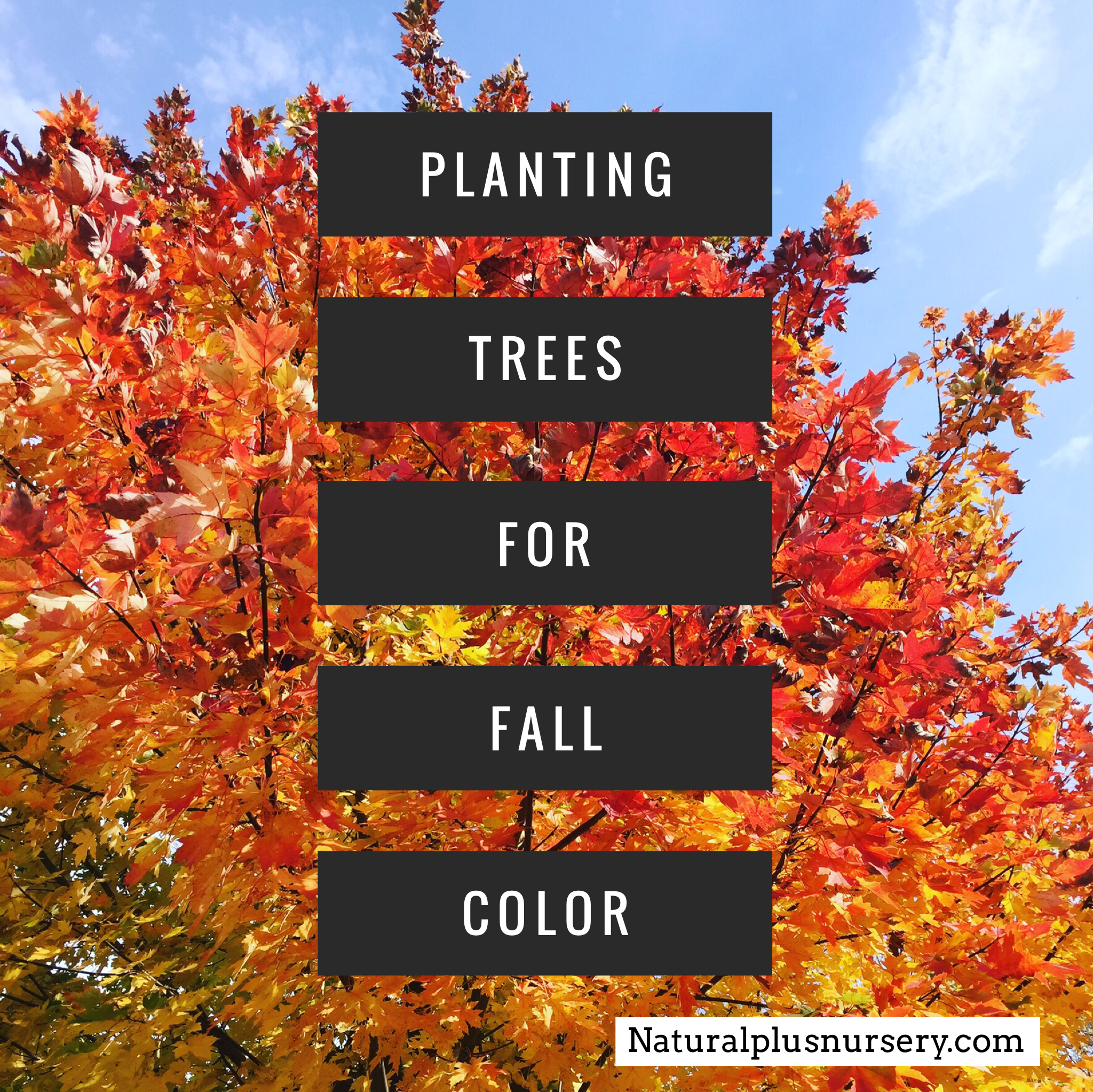
The beauty of fall colors touches the soul. Take time to pause and enjoy this special time of year.  The reds, yellows, and oranges of trees in the fall all add to the fall splendor.

Here are some Natural Plus favorites for adding fall colors to your yard/landscaping:

Ornamental/Smaller Trees with Fall Color (10-30’ size):

·      Amur Maple           Brilliant red fall color, clump or single stemmed

·      Serviceberry          Orange/reds , berries for birds, clumps or singles

·      Hot Wings               Reds/oranges with bright red seed pods


Larger Shade Trees with Good Fall Color (over 30’)

·      Aspen                                               Quaking golden yellow leaves

·      Birch                                                 Yellow, clump or single stemmed

·      Ginkgos                                            Golden yellow (slow growing)

·      Lindens                                            Yellow, heart shaped leaves

·      Locust                                               Yellow wispy leaves

·      Maples: Autumn Blaze               Brilliant Red, fast growing

·      Maples: Burgandy Belle                    Burgundy Red

·      Maples: Emerald Luster                    Golden Yellow, fast growing

·      Maples: Rubrum                           Bright Red

·      Maples: Sugar                                Multiple varieties – oranges, reds, yellows

·      Red Oaks                                         Red

·      Witch Hazel                                      Fragrant yellow blooms in fall

PLANTING PERENNIALS THAT ATTRACT BUTTERFLIES

IMG_0225.PNG

 Planting Perennials that Attract Butterflies

 Almost anything that blooms in the summer will attract butterflies.  The most difficult part of planting to attract butterflies is narrowing down the choices. 

To get started ask yourself these questions and choose the plants that best suit your area: 

·      How tall do you want the plant to get?

·      Does your area have sun, shade, or part sun, and what direction does it face?

·      Do you want an evergreen or leafy plant?

·      Do you have any special wishes for the plant – color, blooms, etc.

Choosing native plants is always a good option.  

Some common perennials that are butterfly favorites include

·      Butterfly weed (Asclepias) -  Bright orange blooms, grow app. 2’

3EDE56D7-6A60-4236-B182-E4F4EB7070B6.JPG

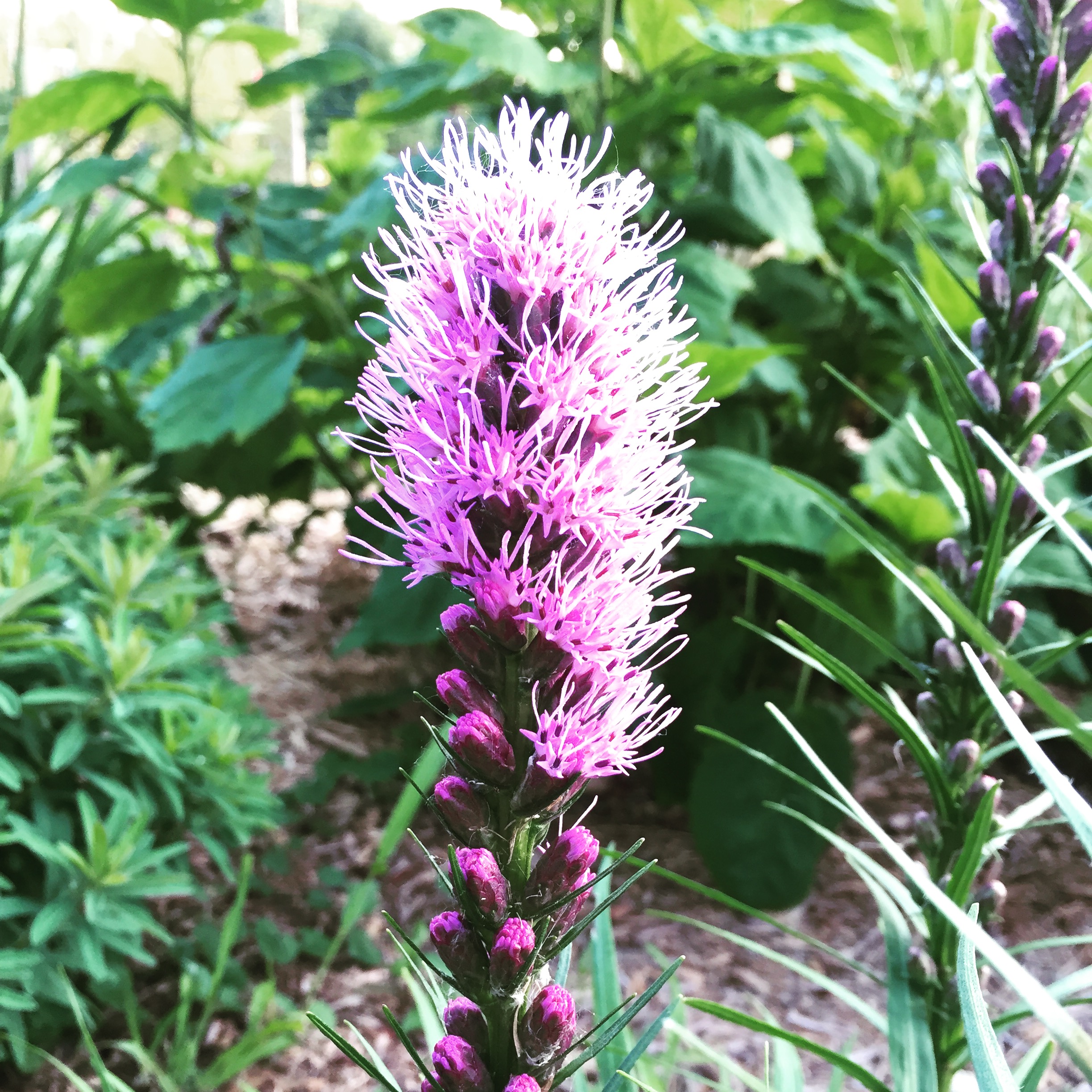
·      Blazing star (Liatris)- Spikes of lavender blooms, grow app. 2’

·      Cone flowers (Echinacea) – Come in multiple colors and sizes

·      Black Eyed Susans (Rudbeckia) – Bright yellow with brown centers

05767070-5471-4633-B813-ADA8F87473D9.JPG

·      Bee Balm (Monarda) – Come in multiple colors and sizes

BFFC8BBD-C7BE-4DC4-8C0F-97B561344166.JPG

·      Cardinal Flower (Lobelia) –Bright red blooms, grows 3’

·      False Sunflower(Heliopsis) – Bright yellow flowers, grows 3’

11E29682-D78F-4094-B2D1-9E51FE05AAC8.JPG

·      Hyssop (Agastache) – Blue violet spikes , grows 3’

·      Phlox – Come in multiple colors and sizes

EED33BF6-1408-4F36-943B-3BE29A5D03AD.JPG

·      Sedums – Come in multiple colors and sizes

TIPS FOR SUMMER PLANTING

TIPS FOR SUMMER PLANTING

TIPS FOR SUMMER PLANTING

Summer has finally arrived and the beautiful colors and blooms of summer are everywhere. A common question we get in the summer is

“Is it too late to plant?” 

The answer is no.

Container grown plants can be planted anytime from spring through fall. And a benefit of planting now is that you can see the foliage and blooms of the plants you are choosing.  So if you have procrastinated or simply ran out of time earlier to complete your gardening projects there is still time.

Four questions that you should consider when choosing any plant are:

·      How tall do you want the plant to get?

·      Does your area have sun, shade, or part sun, and what direction does it face?

·      Do you want an evergreen or leafy plant?

·      Do you have any special wishes for the plant – color, blooms, etc.

Once you have the answers to these questions, we can easily help you pick the plants for your areas.