flowers

Ree's Top 5 Plants

Ree's plant picks.png

What makes you LOVE a certain plant? Do you look for COLOR? Texture? The shape? Do certain plants have special meaning for you? Or maybe you have memories of plants that your grandparents had in their yard growing up?

All of us here at Natural Plus love helping you find the perfect plants for your yard that you will love for years to come. And, after being in business for 42 years, we have figured out what plants do well and are our favorites!

If you’re in the market for some new trees, shrubs, or perennials, you’re going to want to follow along with these blog posts, I’ll be sharing each of our top 5 favorite plants with all of you!

Next up is Ree, who has been employed at Natural Plus since we bought the nursery in 2014. Fun fact: she is my (Mary’s) aunt).

HERE ARE REE’S TOP 5 PLANT PICKS:

1 . Autumn Blaze Pear: It’s a medium sized tree and has a brilliant fall color (35 tall and 20 wide)

Photo from Baileys Nursery

Photo from Baileys Nursery

2. Easy Elegance High Voltage Yellow Rose: I love the yellow color and it reminds me of the song my daughter Atty used to sing, “The Yellow Rose of Texas”
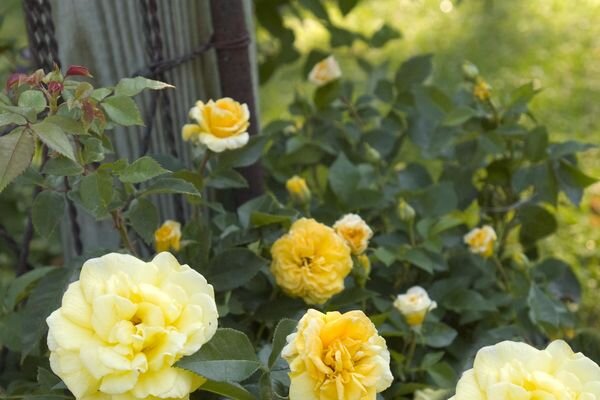
Photo from Baileys Nurseries

Photo from Baileys Nurseries

3. Bailey compact viburnum: I love it because of its compact size, and brilliant fall color

Photo by Mary Hopper

Photo by Mary Hopper

4. Siberian Iris: Because of the contrast in color, it’s purple and yellow for the Lake Mills Bulldogs, the Lakers and the Vikings. I also just love irises.

Photo from Walters Gardens

Photo from Walters Gardens

5. Marquee Moon Daylily: It has a soft creamy yellow color to it.

Photo from Walters Gardens

Photo from Walters Gardens

This was so hard to pick, Ree added, “and there are 8 million more!”

She also loves the purple sandcherry and the ivory halo dogwood because of the variegated leaf and red twigs in the winter.

And, in case you missed them, here are owner Dave’s Top 5 Plant Picks and employee Mike Watson’s

6 Must-Have Late Fall Perennials

late fall perennials (2).png

6 Must-Have Late Fall Perennials

Fall blooming perennials are especially important food sources for butterflies and pollinators.  These plants will attract butterflies and pollinators to your yard.

Asters

Asters

·      Asters – Natives come in purple, blue, and pink. A couple of my favorite varieties are Purple Dome (deep purple, globe shaped) and Alma Potsche (bright pink – grows 4-5’)  Bloom September/October

·      Black Snakeroot – Deep burgundy leaves with pink spiking blooms, shade tolerant, Grow 3-4’ , Blooms September/October

·      Dahlias – These are bulbs that must be dug late fall, stored, and replanted in the spring. My favorite color is deep burgundy red. Grow 3-4’ Bloom August-October

·      Joe Pye Weed –Native, Purple/lavender clusters of blooms, Native Americans used as a medicine for fever, etc., Grow up to 5’, Sun or part sun

Tiny Tortuga Turtlehead

Tiny Tortuga Turtlehead

·      Pink Turtlehead – Pink blooms resemble a turtle peaking out of a deep green plant. Grow 3-4’, Sun or shade tolerant.

·      Sedums – These come in multiple varieties. A couple of my favorites are Frosty Fire (green & white variegated leaves with lime green/red blooms), Mr. Goodbud (green leaves, bright magenta blooms), and Carl (red stems, magenta blooms)  Butterfly favorites  Grow 2-4 ‘,  Also come in ground cover varieties, Bloom August- October

Cherry Truffle Sedum

Cherry Truffle Sedum

Grasses are another great addition to the fall landscape. You can read more about Grasses HERE.

More articles you might like:

PLANTING PERENNIALS THAT ATTRACT BUTTERFLIES

FALL BLOOMING PERENNIALS

FALL BLOOMING PERENNIALS

fall blooming perennials.jpg

Fall Blooming Perennials

Fall perennials can add vibrant color to your yard or landscaping. Many are also butterfly and hummingbird favorites.

Some of the summer perennials will hold their blossoms or color into early fall.  These include hibiscus, coreopsis, Russian sage, black eyed susans, coral bells, some cone flowers, and others. These can be planted for summer color but will last into early fall.

IMG_2638.jpeg

Of these late summer/early fall perennials, the hibiscus is a Natural Plus favorite.  Many people are surprised that they are hardy. New north varieties do very well. They emerge late – mid June – but by mid August are up to 4’ tall and wide and have very large plate size blooms in colors of reds, pinks, and whites. Some varieties have reddish leaves. Plants often have 10-15 blooms at one time. They are truly stunning. Plant in full sun. After the growing season, wait to trim hibiscus back until spring as stems are hollow and more prone to freezing if trimmed back in the fall. Mulch before winter.

B80D8BE4-15EC-4D45-BABF-0F3B258881E3.JPG

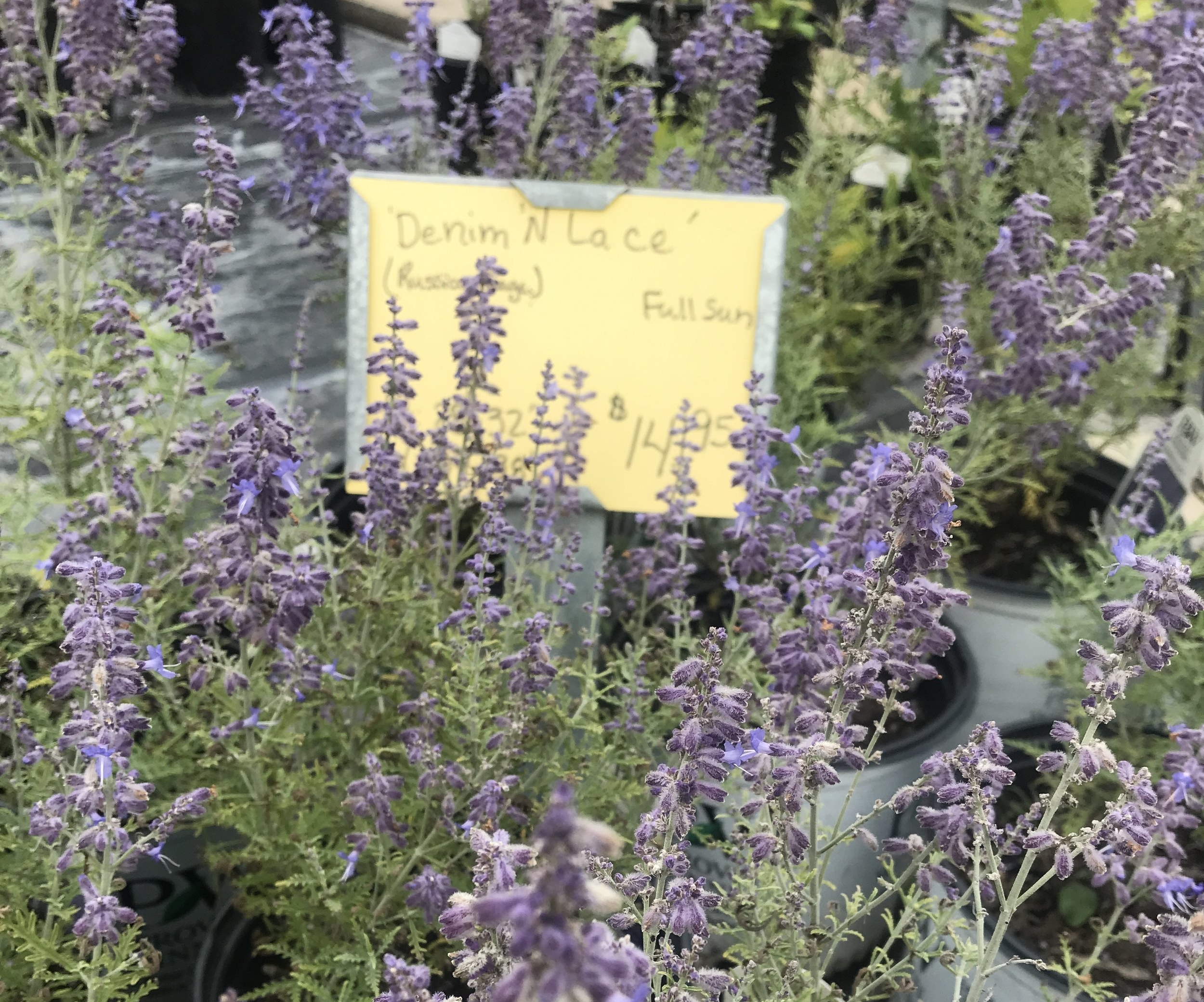
Russian Sage is always an easy to grow good choice for summer and early fall color and is heat and drought tolerant. Russian Sage grows about 3’ tall with striking purple blooms and is often used as a background plant. Plant in full sun.

IMG_0943.JPG

Later fall blooming perennials will add striking color to the late fall garden and will attract butterflies and hummingbirds. (Read more about perennials that attract butterflies)

Some Natural Plus favorites include:

·      Sedums – Large 5-6” clusters of blooms top these sturdy flowers. There are many varieties to choose from with most plants growing from 12-24”. Plant in full sun. They bloom into late fall. One plant might be host to 50 or more butterflies on a beautiful fall day.  

IMG_0944.JPG

·      Asters – These are an excellent substitute for mums that are very borderline hardy in north Iowa. Purple Dome is a Natural Plus favorite. It grows about 18-24” and is covered with deep purple blooms until a hard frost. These are also butterfly favorites. There are many other varieties of asters including Wood’s Blue, Wood’s Pink, Alma Potschke, etc. Plant in full sun.

·      Pink Turtlehead – Turtlehead is native to wet woodlands and stream areas making it a good choice for wetter areas and rain gardens. Blooms emerge in late August and are deep rosy pink amid dark green leaves. Unique blooms resemble that of a turtle head. Plants grow 2-3’ tall. Plant in full or part sun.  

·      Joe Pye Weed- Plants grow 5-7’ tall and have large fragrant mauve-pink flower clusters that are also a butterfly favorite. A dwarf variety, Little Joe, grows 3-4’. Plants grow best in moist areas in full sun to partial shade. These are also good choices for rain gardens.

·      Helenium – also known as sneezeweed.  A native - plants have bright yellow to red daisy-like blooms. Despite it’s name the plant does not cause hay fever or sniffles. Native Americans believed the plant actually cured fevers and head colds.

Enjoy and savor the vibrant colors, sights, and sounds of fall. 

Learn more about fall plantings...

6 Simple Tips to Making Your Own Fresh Flower Arrangements

flower arranging.jpg

A small fresh flower arrangement on the table adds beauty and delight to your home, and does not have to be hard.

All flowers are beautiful.  

I have never seen a “bad” arrangement.  Any one, any age can do it. However, following a few simple artistic design principles will improve the final design.

Here are some ideas and tips you might try:

1.     Do you pick your vase first or pick your flowers first? If you have a vase you want to use, start with that.  But, in general, I find it easier to pick my flowers first. Then I have a better idea what color and size vase to use.

I like to choose a vase totally opposite in color to the flowers (for example – for white hydrangeas, pick a purple vase)  OR match a color in the flowers to the vase (for example – for cone flowers pick a golden brown vase to match the golden seed heads of the flowers).  When in doubt, a green or clear vase usually works well.  A wide mouthed vase obviously takes a lot more flowers than a narrow mouthed vase. I find wide mouthed vases harder to arrange unless you have large flowers like peonies or lilacs.

2.     Pick the main larger flowers you want in the arrangement first. Some good choices that hold up well include tulips, daffodils, peonies, iris, lilacs, mockorange, roses, hydrangeas, phlox, cone flowers, sedums, daisies, black-eyed susans, etc.  (Daylilies and hibiscus do not hold up well.) Cut flowers to the appropriate length. Usually they look best if they are cut to about ½ to 2/3rds as tall as the vase. (For example - towering tall flowers in a short vase look like they will topple over – and often do!).

3.     Arrangements do not have to be large. Some of my favorite fresh arrangements are tiny ones that use lily of the valley, brunnera blooms, astilbes, or zinnias.  

4.     After choosing your primary flowers, pick smaller filler flowers with complementary colors to add to the arrangement. Some of these filler flowers might be daisies, zinnias, astibles, mums, asters, hosta flowers, etc. Cut these filler flowers to about 2/3 length of the other flowers you picked. Place around the taller flowers.

5.     Add filler greens to complete the arrangement.  Some of my favorite fillers are baptisia leaves, astilbe leaves, small fern leaves, Russian sage, and hosta or brunnera leaves.

6.     Finish the arrangement by tying a ribbon or string around the vase if desired.  Add water.

 Making Fresh Arrangements with “Wet Foam”  

1.     If you have a low container for your arrangement you will want to use wet foam for placing the flowers.  Using a sharp knife, cut the foam to the size of the container and about the height of the container or slightly higher.

2.     Arrange the stems of your primary flowers in the foam. Often the “rule of 3” is a good one to follow. Typically 3 of something looks more artistic than 2 of something. Or an odd number usually is more pleasing than an even number. Fill in around the primary plants with other flowers and greenery, cutting those flowers to about 2/3 the length of the primary flowers.   

3.     Use filler leaves, such as hostas, around the outside edge of the container to cover the foam.  Small sprigs of evergreen might also be used as a filler. Moss or beads may also be used to cover the foam.

4.     Adding a bow or ribbon also enhances the final look.

5.     Water the arrangement.  Keep wet foam moist to make the arrangement last longer.

flowerarranging3.jpg